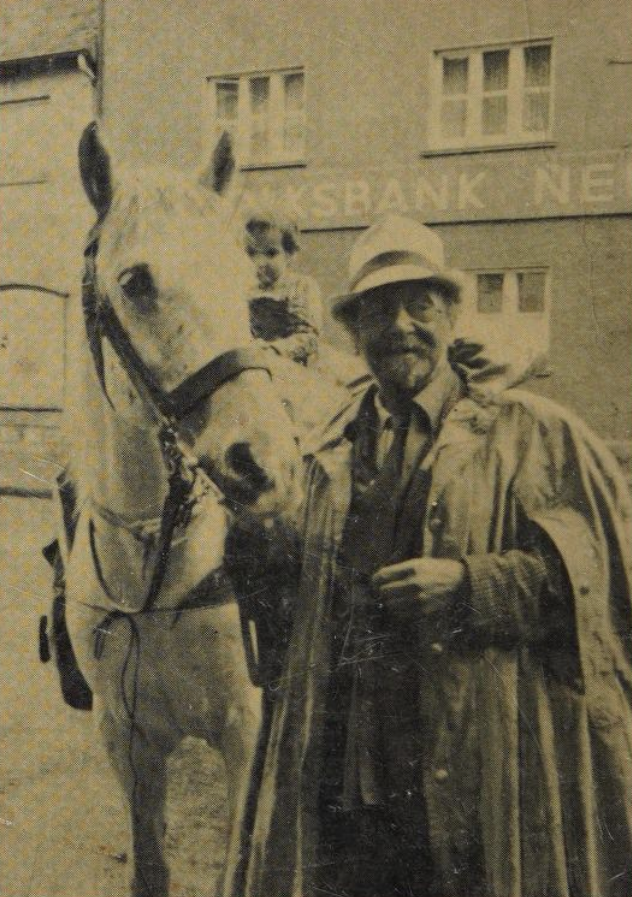
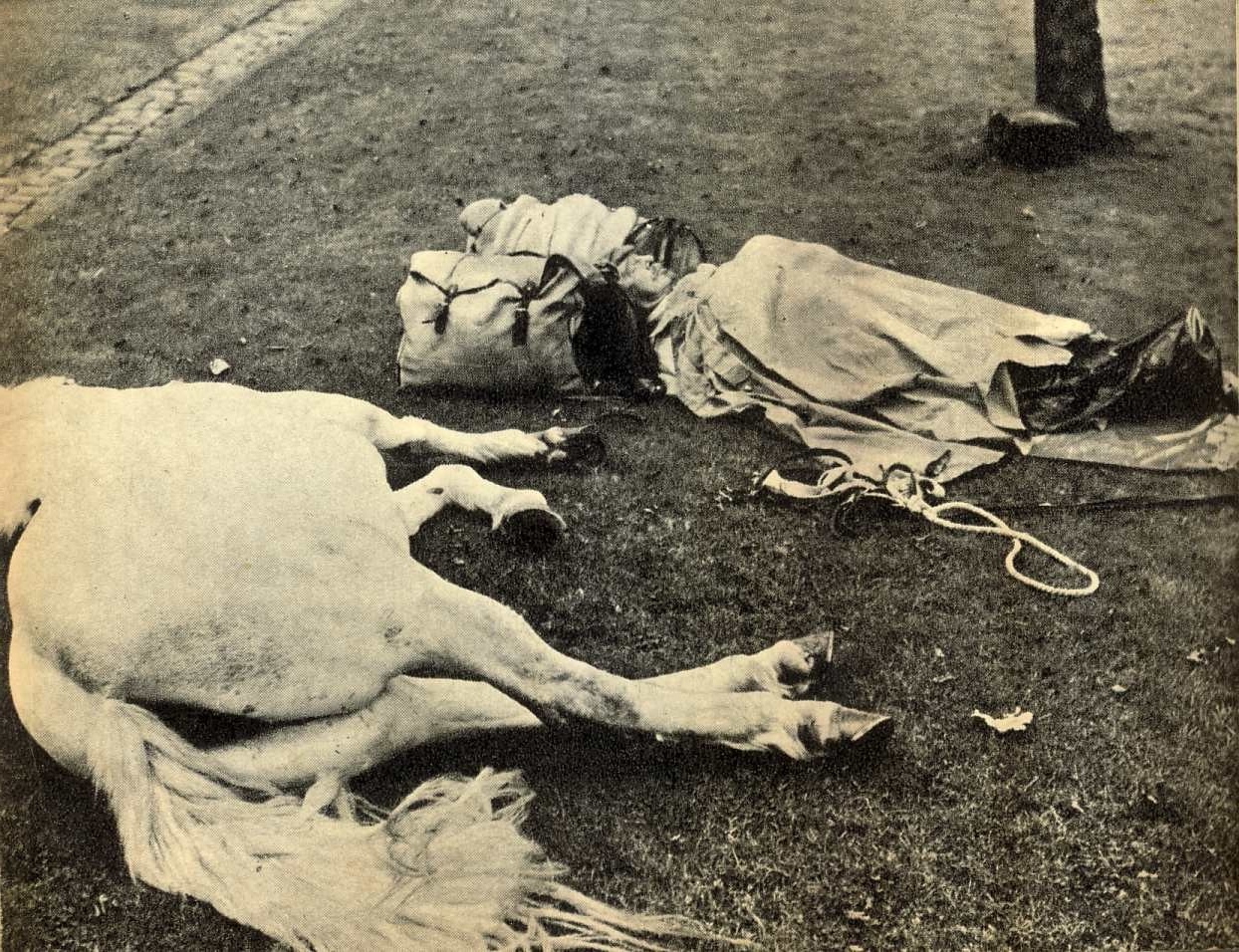
You always hear the story of his life first. Certainly you will know much of it long before you learn he was a novelist. He came to novels quite late, in fact, at least in relation to his other pursuits: blacklisted and in dire poverty in his mid-30s, a friend had suggested, going off the strength of his letters, that he could make a good go of it as an independent means of living. In the colourful and well-rehearsed narrative of his life, the novels come after his time as a weaver, self-educated tutor of numerous foreign languages, silent film stuntman in Weissensee, logger in British Columbia, merchant seaman and globe circumnavigator, itinerant preacher, anti-unemployment activist and prisoner, and before his time as a door-to-door book salesman, BBC Radio Personality of the Year 1949, and sexagenarian continent-crossing horseman. You will first encounter him in other texts; in the warm reminiscences of contemporary admirers, believe-it-or-not newspaper columns and Calderdale history blogs. They are attracted not only to his vivaciousness, the breadth of his experiences and curiosities, but to the way in which, to quote Glyn Hughes, "his thought related himself to the whole history of man" (46): his eccentricities, rather than setting him apart from home and its traditions, instead bring them into clearer focus. He is always, in life and writing, returning North to Todmorden, and the first volume of his autobiography, I Haven't Unpacked, begins and ends in its weaving sheds.
Weaving is crucial to his North’s image, the connective tissue that allows him to move backwards and forwards without losing his centre. It joins him to a great lineage of independent artisans; to a ‘golden age’ of pre-industrial domestic weaving, whose passing was heavily lamented by the region’s later generations. At the same time, it connects him to the rest of the world, to a lineage that goes back to right “before the pyramids of Egypt, all through human history” (46), as he rhapsodises to Hughes in his kitchen. As a teenager, while sat at his loom, he practices German grammar exercises by writing with a reed hook in the dust along its breast beam. Eventually he sets out to find what he’s read about in books, and in his travels seems to pass through the world with the frictionless ease of thread through a jenny. Take, for example, his memories of the Western Front: “In spite of the ugly periods of the campaign, the lice-infested dug-outs, the sordid muddy wastes and stagnation of the Ypres salient, the gas, I cannot recall my War days without a twinge of nostalgic longing. Beauty never forsook the world for long.” (63). In his books the Earth is like a great stream of cloth unravelling before you.

His iconoclasm and openness, and a resultant hatred for groupthink and hypocrisy, has politically radicalised him by the mid-1920s. For the first time he describes feelings of anger. He rails against the cynicism of anti-Socialists whose arguments “were based on their professed lack of faith in human nature. I took objection to the tone of many of the speeches delivered by very wealthy men. From their speeches it was clear to me that they used this ‘human nature’ argument with pleasure, and considered it fortunate that human nature was not so good as the Socialists believed. This insolent attitude infuriated me […] As I walked through the streets of industrial Lancashire moods of rebellion came—rebellion against something vague and monstrous.” (164-5). He becomes a committed member of the Communist Party, and is soon elected town councillor. While never quite abandoning these political sympathies, he is eventually alienated by the sectarianism and opportunism of his comrades (“well-known loafers”, as he puts it) and returns to life as a “Nonconformist who doesn’t conform with the Nonconformists” (48; certainly it is easier for him to find work this way).
Often it seems as if his sympathies, much like his passions, run in all directions at once. By his own admission, his political radicalism came more from a “spiritual uneasiness” rather than a particular liking for Marxist analysis. He was a budding entrepreneur, and in the early 1940s, like the mill-owner Gaukroger Ackroyd from his novel the Weaver’s Knot, invented and attempted to license a new kind of weaving shuttle (Ackroyd’s shuttle allows a weaver to operate eight looms instead of the usual four, and its adoption inevitably threatens jobs and leads to unrest at Gaddens Mill). There are traces of him, or at the least the picture he gives us of himself – resourceful, scrabbling, morally consistent to a fault – in Ackroyd, just as there are traces of him in Joss Hollyrake, Gaukroger’s love rival, polar opposite, and charming, pleasure-seeking idle loafer. Like his author, Joss recalls the stereotypical weaver of the late 18th century, who before the advent of spinning mills (and much to the chagrin of their clothier-employers) kept to their own erratic and drawn-out schedules, balancing weaving with other pursuits. In describing his own life, the author could have spoken for Joss when he claimed to be "working to live and not living to work." Unlike Joss, he had the ingenuity – and no shortage of bravado and self-marketing nous – to go professional with his loafing. “One thing I must say,” his son Vincent wrote in 2001, “is that growing up in the shadow of a man such as my father was not easy. Each of his successes came at great pain to the rest of the family and I have always been surprised that no would be historian has addressed this issue. By all means keep his memory but remember his wife and family too.”
His greatest passion may have been >>>>