North is a series of small cages. The type of cage we start in bears no relation to personal qualities, good works done for others, book-learning. It is fate, it is riveted into “blackened sky.” Some people simply start better off than others and while they do not deserve it anymore than we do that’s what just fate is. That is the world that is life. We can only counteract it by reaching from our cages to take what we can of what is ours (sex, money, acclaim, freedom). All is libidinous. Power is libidinous and we relate to one another by power. To relate in a different, more tender way is a luxury afforded to other people, mostly saps content with their lousy lot. But to relate libidinously – to take what is ours – seems a luxury afforded to others as well. Because it is a luxury afforded to others we cannot trust others and must beat them at their own game. We are self-absorbed, but everything unfairly resides in others: this is the crisis endured by us voyeurs. The crisis is what drives us and is what makes us hate our drives, because we see them in other people and deplore them for it. But this is also what justifies our drives to ourselves: that the baser wants – sexual, material, individual – are common to us all. It is incontestable it is simple. We know because we know and there is no use pretending otherwise, and so we have to act, like everyone else, for ourselves, or we risk being stuck in the cage for life.
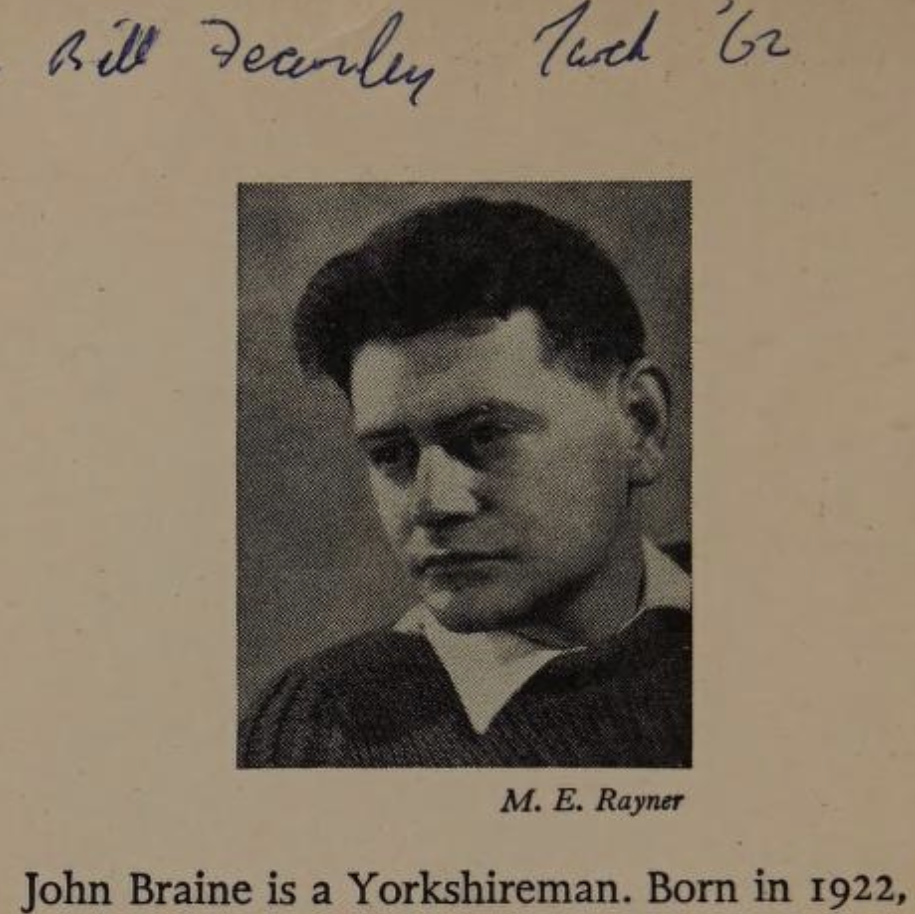
For many of the tortured antiheroes of his novels – if you are familiar with any of them, it will be Joe Lampton of Room at the Top, Life at the Top, and subsequent film and television adaptations – this is what passes for the truth, reinforced in this self-evident and circular way. He said once that “the only thing for the novelist is to tell the truth about human beings and the world they live in”; that “that’s where the magic is.” That’s from a film he made for the BBC. He later puts it like this: “I want to write about [Western] society as I see it; to tell the truth, which is sometimes to celebrate, sometimes to mourn, but never to suggest any radical change.” As one might imagine, the truth in his novels can resemble a type of Hell. Truth leads nowhere and nothing is overcome; our desires and dissatisfactions are bound to repeat themselves, thwarted by the injustices and vicissitudes of life. This is, famously, Joe Lampton’s story, who succeeds in escaping the cage of his class only to find himself trapped in another more gilded one.
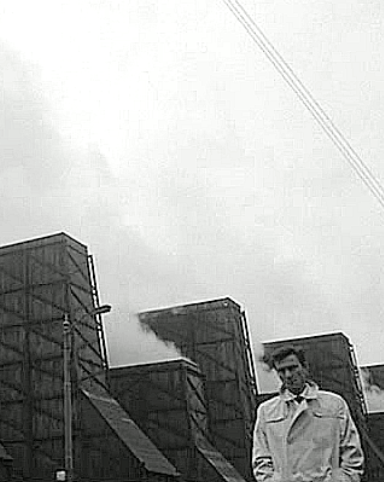
Every novel is like he is beginning again: beginning to work through the same wants, and the same fleeting excitements, bitter grudges and prejudices those wants engender, even though he knows from experience that he will never succeed in satiating or overcoming them and that he will only find himself back where he had started. But to him, he insists, this is paradise. “It’s English suburbia I love,” he said. “Its critics say that it’s repressive, convention-ridden, deadening, regimented. To me, it’s a place of riotous individualism, and civilised with it.” He said he would write of ordinary people and their passions, though stops short of expressing any particular fondness for ordinary people. Perhaps he could reconcile this because their passions, as he saw them, happened to be his own. His protagonists tend to find other people unbearable, and struggle terribly to relate to others outside of their individual desires. Often he has to invent a friend for them, who can share in their isolation and misanthropy. Lampton has Charles; Dick Corvey, from his second novel the Vodi, has a very close, competitive, and later acrimonious, friendship with Tom Coverack. These friendships are attempts to justify the great tensions at the centre of his work: between this professed interest in the lives of others and the terribly solipsistic delusions of grandeur of his protagonists; between his professed love for Middle England and the deeply unhappy lives he depicts circling inside of it. Sometimes to mourn, sometimes to celebrate. To give him credit, he is not unaware of these tensions, and though incapable of addressing them directly his convoluted references to the matter tell stories of their own.
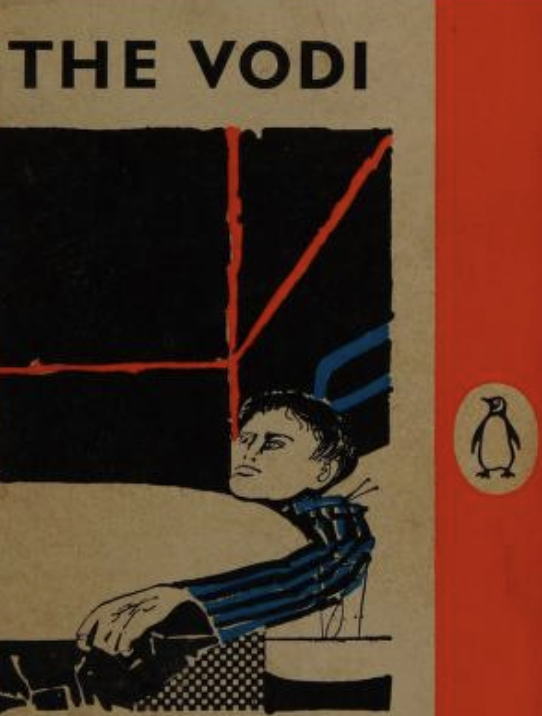
In the Vodi, Dick and Tom meet as young children, and the more dominant Tom soon introduces him to an elaborate superstition of boggart-like creatures who are secretly responsible for the fortunes and misfortunes of the townspeople. The Vodi and their chief-in-command, a grotesque and elderly succubus called Nelly, give special dispensation to the selfish, so long as they are bold and resourceful, and punish weaker sinners. The Vodi watch, and intimidate through their watching. They are a device Dick and Tom use to make sense of chance and unfairness, an externalisation of their (particularly Dick's) own sense of guilt and shame, and a way to enact imaginary punishments on others, primarily desirous women and impotent men. Early in the novel, Dick recounts the story of Walter, a married man who is arrested on suspicion of raping and murdering a local young woman. He and Tom say it was the Vodi: “’They’ll only acquit him if he’s guilty and it’s a really clever murder,’ Tom said. ‘And then Nelly’ll look after him for the rest of his life. But Walter’s just the sort of chap that Nelly doesn’t like.’” As proof of his innocence, Walter is found guilty and executed. The boys visit a shop in Nightingale Green where they are served by a “fat young woman [...] who reeked of perfume and sweat and and when she leaned over the counter it was evident that she wore nothing beneath the overall." They see her once and never again, only ever being served by the shop's male proprietors. To Dick and Tom, "it was easy to work out what had happened; her husband and father-in-law had kept her hidden in the cellar and then one day they’d drunk too much bottled beer. So she’d been forced to attend to the shop; the twenty-four-hour-a-day Vodi patrol had spotted her and now she was a Bride of the Vodi.”
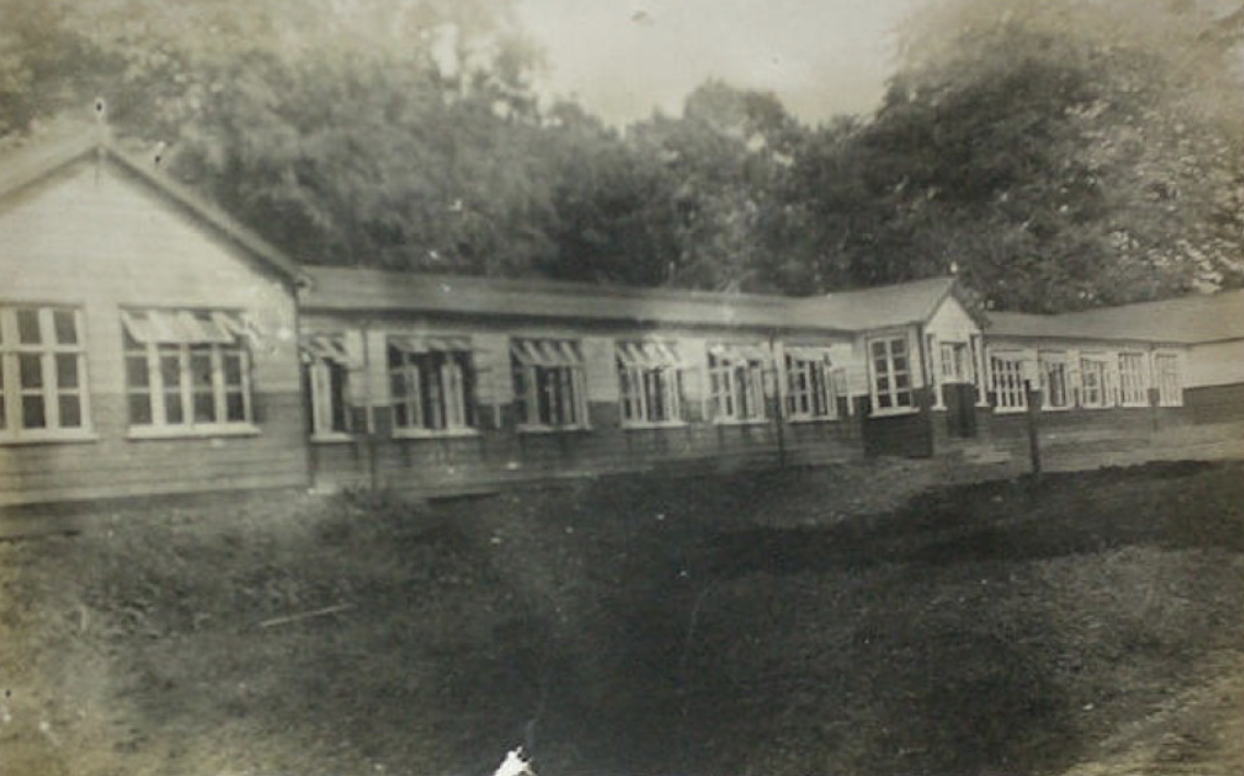
Dick reminisces and fantasises from a sanatorium bed while stricken with tuberculosis, his recovery slowed and complicated by an allergy to antibiotics. He is now a young adult, but holds on to the Vodi myth long after Tom, a womaniser and successful businessman in good health, has abandoned it. It is the only way he can make sense of his situation. Later he explains: “Some people do everything that they should [...] Never do anyone any harm, and they’re always unlucky. Everything goes wrong for them […] The decent people always get it in the neck. And the real swine, the selfish ones, always have good luck. They’re favoured always. Well, it isn’t an accident.”
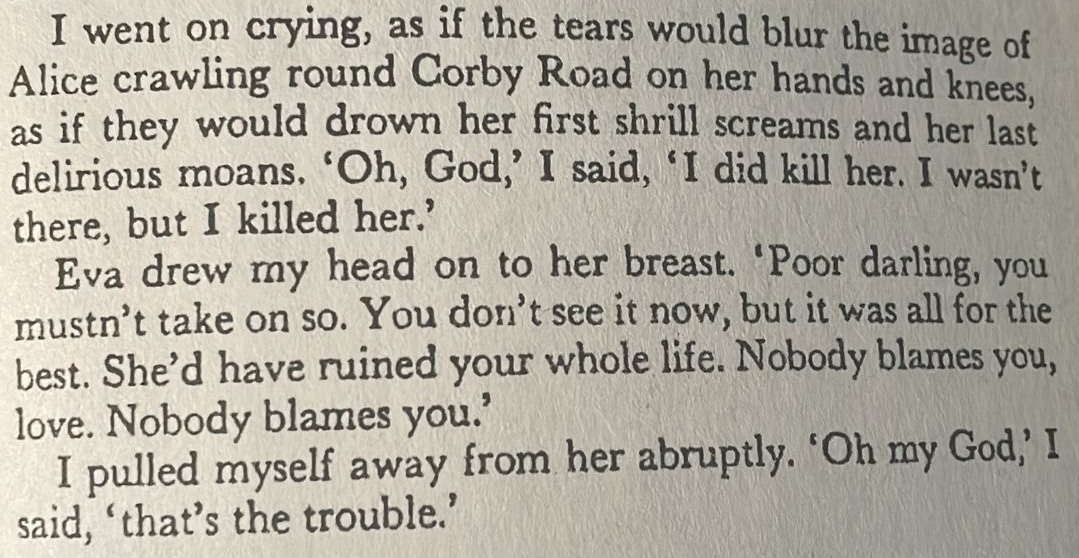
By the end of the novel, Dick comes to realise that he uses the Vodi as a crutch; he recovers and leaves the sanatorium, feeling now that he is the master of his own destiny. Interestingly, Room at the Top has a similar ending but in reverse: Lampton has exercised his “riotous individualism” as intended, and finally the luxuries of a better life are within his grasp, when tragedy strikes and he suffers a crisis of conscience. He longs for eyes of judgement to condemn and restrain him.